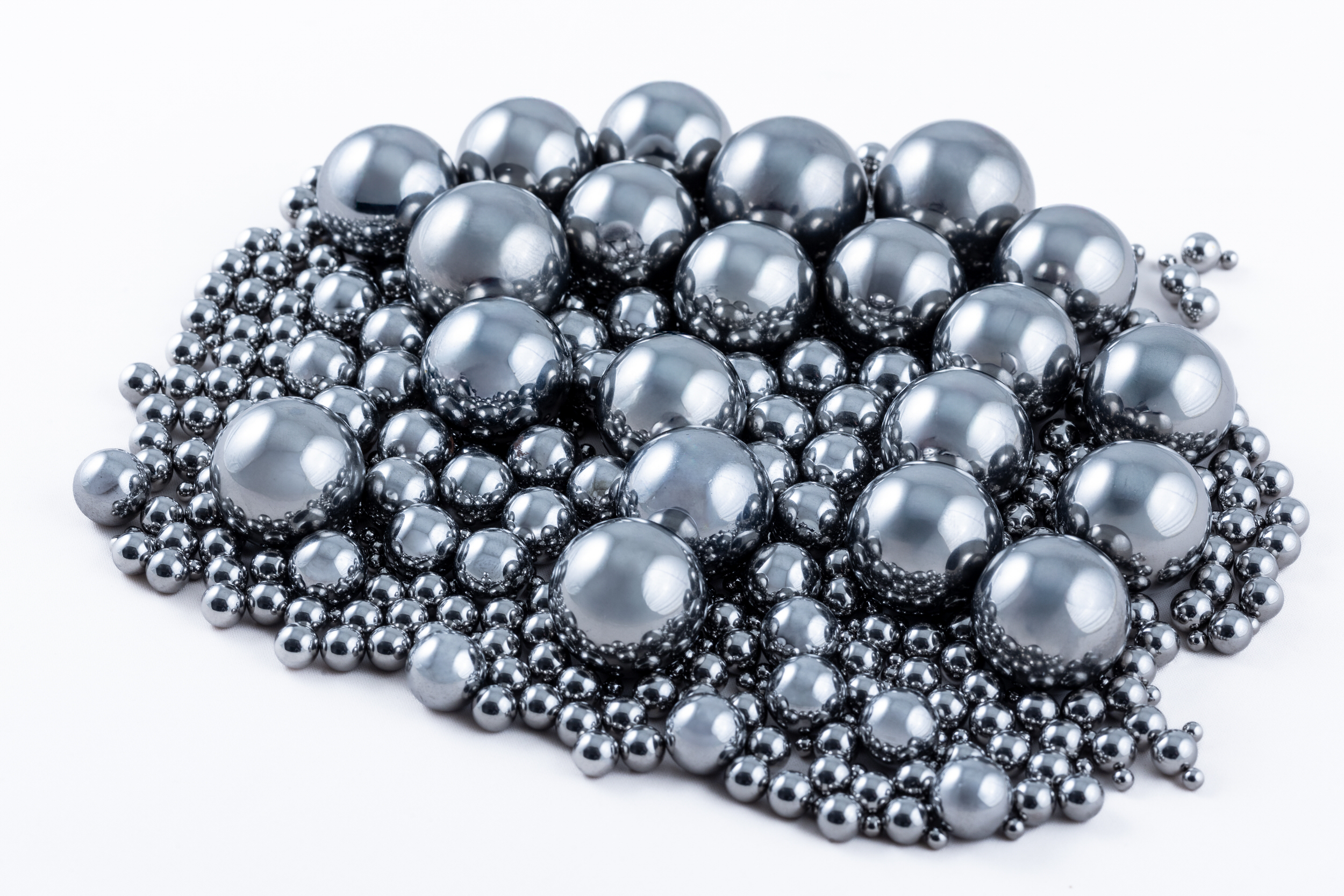
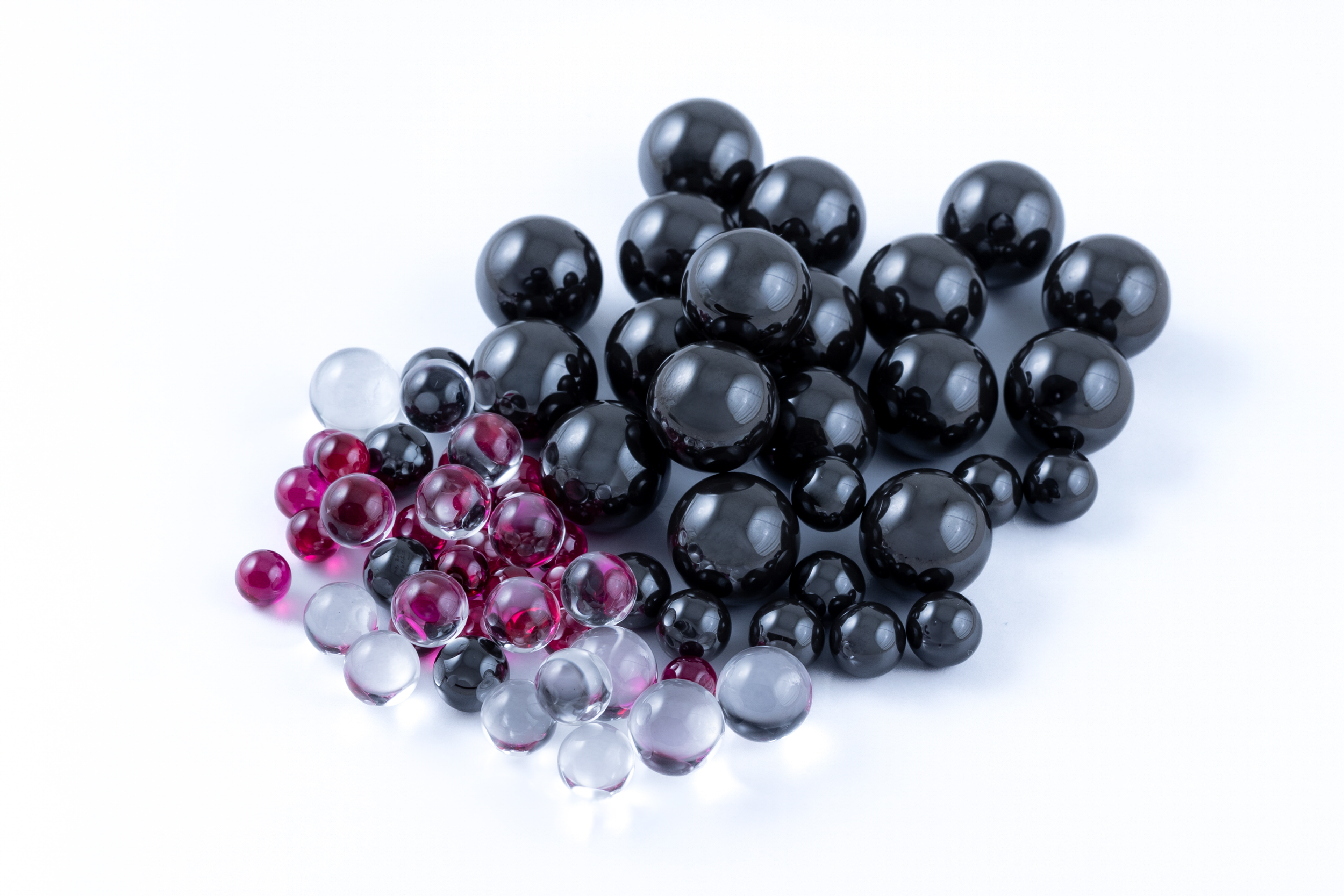
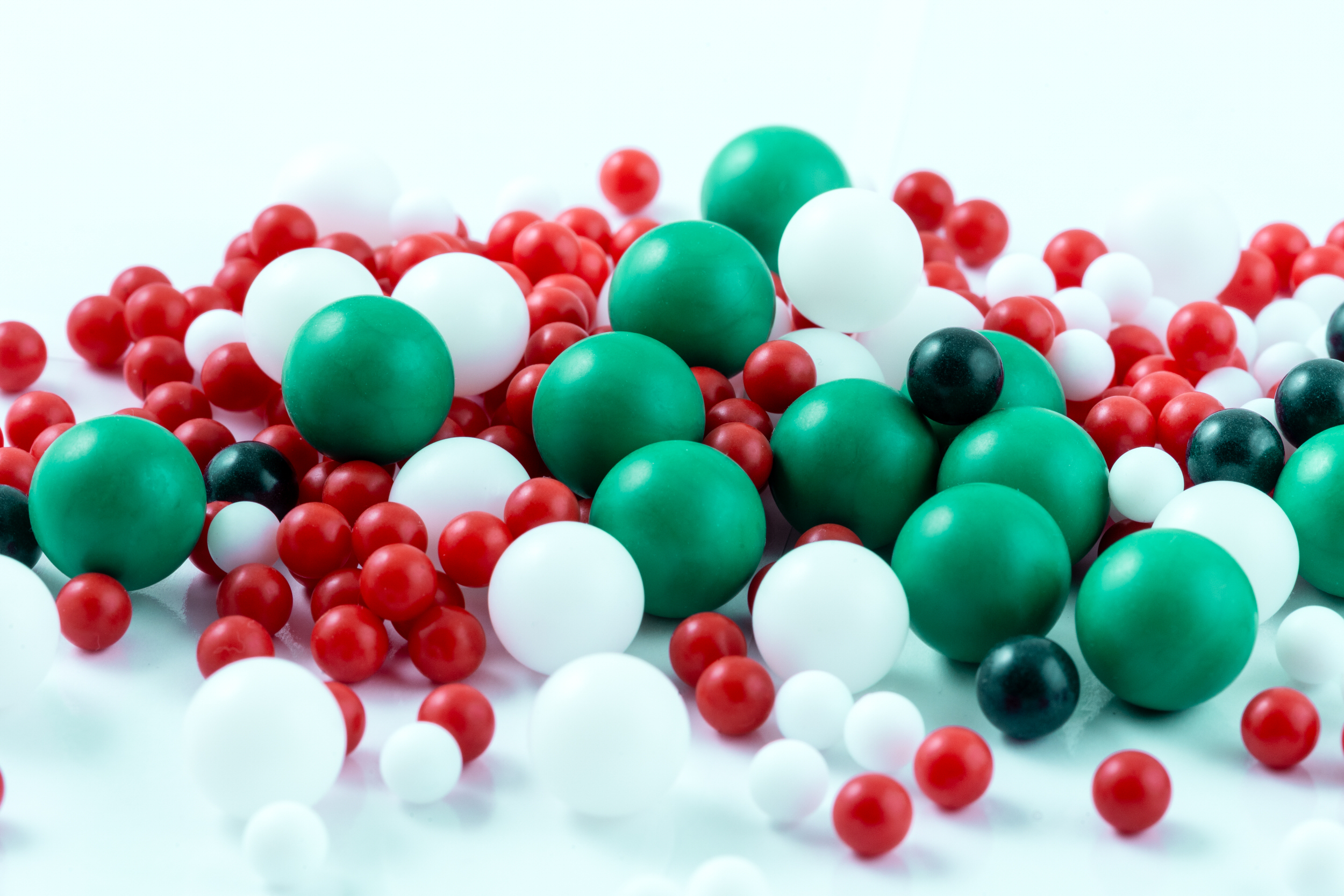
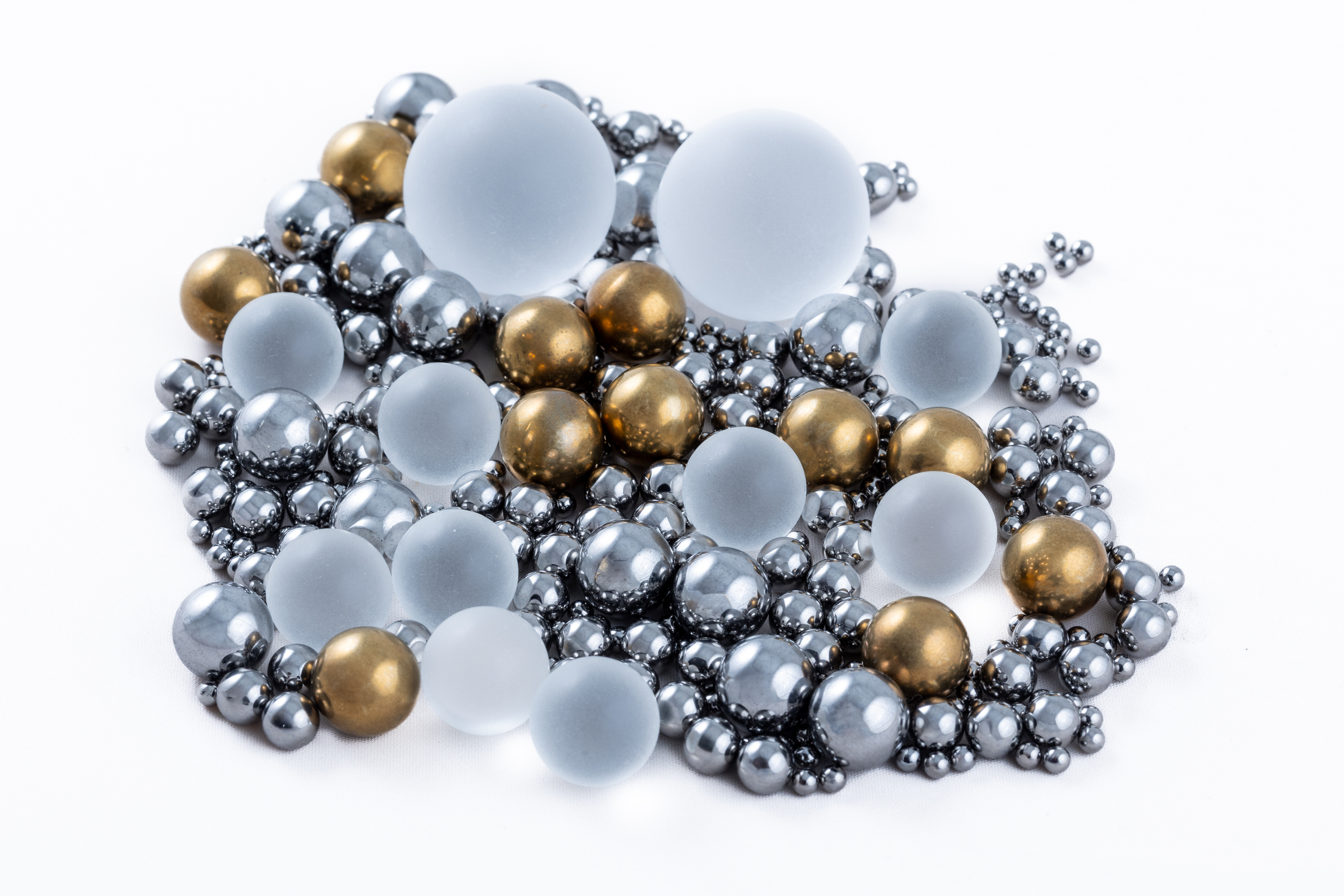
The choice of ball material is made according to the desired physical and mechanical properties. Ceramic is an increasingly used material for balls due to its exceptional resistance characteristics, which can thus meet many constraints.
At the same time, it generates less friction and offers resistant & lightweight properties allowing it to perform well in high machining precision.
This material is widely used in watchmaking, medical, automotive, high-pressure pumps, high-precision bearings and many other sectors.
Friction and wear resistance thanks to a low coefficient of friction
High modulus of elasticity (200 to 400 GPa)
Chemical and thermal resistance. Electrical insulation.
High mechanical strength (flexural strength: approximately 400 to 1,000°C)
Low porosity (< 0.5%), very high-quality polished surfaces
Machining and polishing precision. For example, for a 14mm Al2O3 alumina ball, diameter variations can be reduced to less than 0.1 µm with average roughness Ra up to 0,005 µm.
Applications
High-precision, high-speed ball bearings
Hip prosthesis
Valves
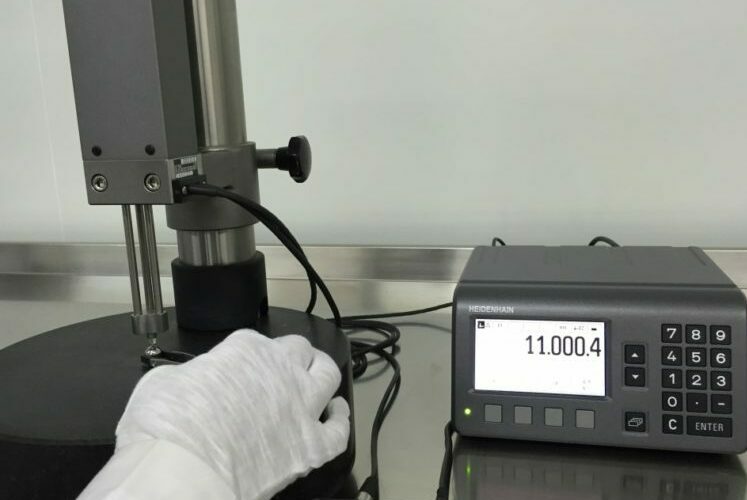
Measuring devices
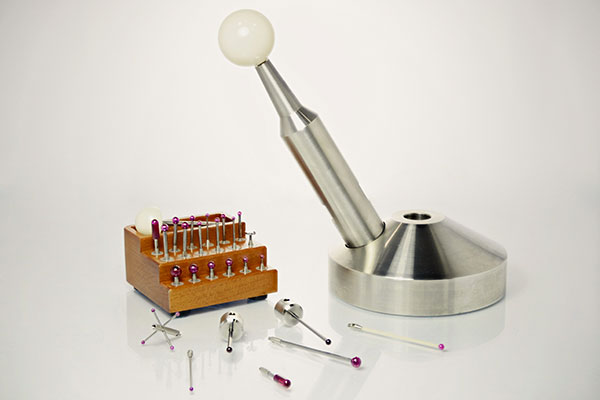
Reference spheres for coordinate measuring machines
Probes for coordinate measuring machines
The following table describes the characteristics of these balls: